
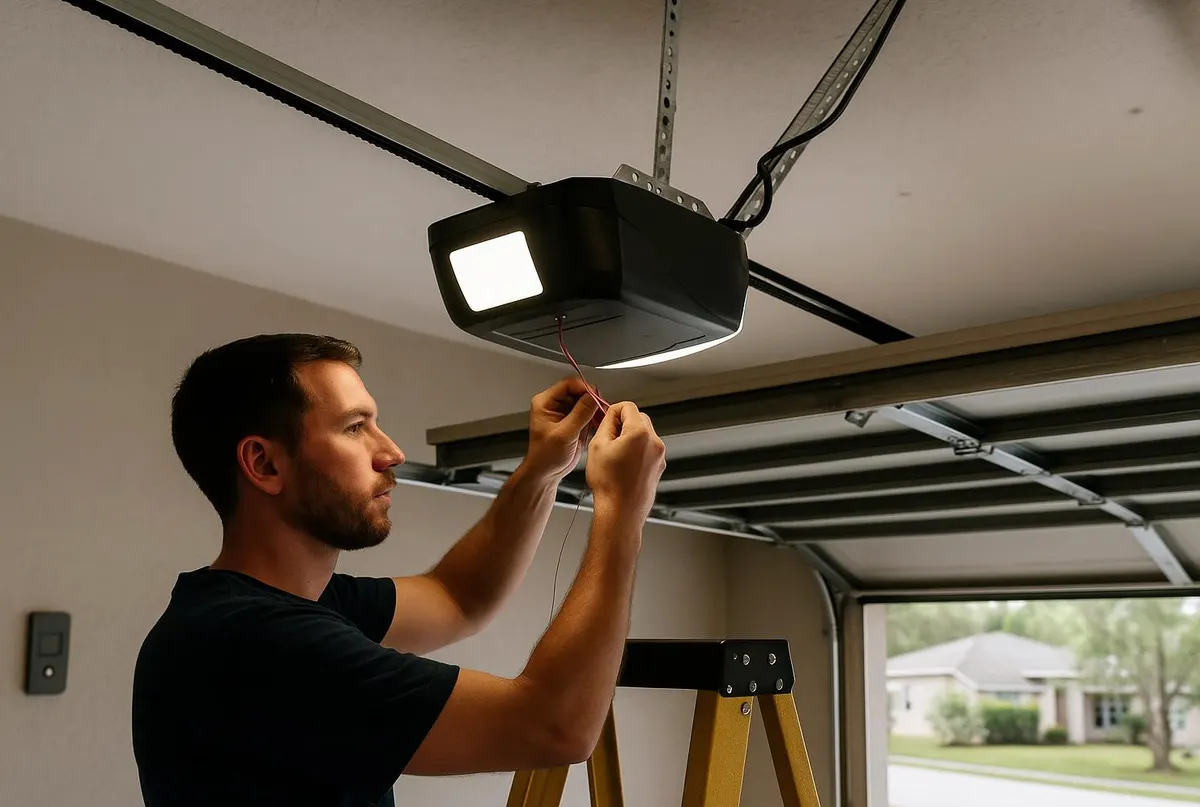
Skip garage door prep this fall and the bill usually shows up in January, not October. A rusted spring that was already weakened by months of dry heat can snap the first time it's asked to lift a door soaked with rainwater. A worn seal that seemed fine in August lets a half-inch of water pool against your slab during the first real storm, soaking anything stored near the wall. An opener sensor caked in dust from a dry summer can misread a few drops of rain as an obstruction and refuse to close at all, leaving your garage open overnight. None of this is dramatic until it happens to you, and then it's an emergency call instead of a twenty-minute fix.
Winter in this part of California isn't brutal, but it's a real shift: dry, dusty air gives way to winter rain, nighttime temperatures drop enough to stiffen hardware, and homes that spent months baking now have to deal with moisture finding every gap. Here's what actually matters before that shift happens.
Clear Out the Dust Before It Meets Water
Dry seasons here leave a fine layer of dust and sometimes wildfire ash on tracks, rollers, and the bottom of the door panel. On its own it's just dirt. Mixed with the first rain, it turns into a gritty paste that works its way into roller bearings and track grooves, making the door grind or bind when it opens.
- Wipe down both tracks with a damp cloth, then dry them completely.
- Brush loose debris off rollers and hinges before lubricating anything.
- Check the bottom seal (the rubber strip along the floor) for packed dirt that's preventing it from sitting flush.
Inspect Weatherstripping and Seals
Summer heat dries out and cracks rubber seals faster than most homeowners expect. By October, the bottom seal and the side/top weatherstripping may already have gaps you can't see without looking closely.
- Run your hand along the bottom seal — if it's stiff, cracked, or has visible light coming through when the door is closed, it needs replacing.
- Check the vinyl or rubber trim along the sides and top of the door frame for the same brittleness.
- Replacement seals are inexpensive and are one of the few garage door repairs a confident homeowner can do solo, but if the track or frame is warped, that's a different problem.
Check Springs and Hardware for Rust
This is the one to take seriously. Garage door springs do the heavy lifting — literally — and a spring with surface rust is weaker than it looks. Rain and the humidity that follows a storm accelerate corrosion on springs, hinges, and the track itself, especially on doors that already had wear from a hot summer.
- Look at the springs above the door for flaking rust or visible pitting.
- Check hinges and the lift cables for fraying or rust at the connection points.
- If the door feels heavier than usual when you lift it manually (with the opener disconnected), that's often an early sign the spring is losing tension — a precursor to a full spring failure, which typically happens without warning and can damage the door or injure someone standing nearby.
Spring replacement isn't a DIY job — the tension involved can cause serious injury — but catching a weakening spring in October beats replacing a broken one in a January downpour.
Test the Opener and Safety Sensors
Garage door openers rely on a pair of photo-eye sensors near the floor to detect obstructions and reverse the door if something's in the way. Dust buildup, condensation, or a sensor knocked slightly out of alignment can cause the door to refuse to close, reverse unexpectedly, or stop responding altogether — all more common once humidity rises.
- Wipe both sensor lenses clean with a soft, dry cloth.
- Confirm the small indicator lights on each sensor are solid, not blinking (a blink usually means misalignment).
- Test the auto-reverse function by placing a block of wood in the door's path and confirming it reverses on contact.
- If your opener has battery backup, check that it still holds a charge — useful during the power blips that sometimes come with winter storms.
Lubricate Moving Parts — But Not Everything
Cooler nighttime temperatures thicken old grease and make hinges, rollers, and tracks noticeably stiffer. A light coat of garage-door-specific lubricant (not WD-40, which attracts dust rather than repelling it) on hinges, rollers, and the torsion spring itself keeps things moving smoothly through winter. Avoid lubricating the tracks — they should stay dry and clean so rollers glide rather than slide.
Check the Door's Balance
With the opener disconnected, lift the door halfway by hand and let go. A properly balanced door stays roughly in place. If it drifts down or slams shut, the springs are out of adjustment — another sign it's time for a professional look before the hardware is working harder in colder, wetter conditions.
When to Call Corona Garage Door Pro
If you're seeing rust on the springs, a door that feels heavier than it should, sensors that won't stay aligned, or a seal that's beyond a simple swap, it's worth having it looked at before the rain arrives rather than after. Corona Garage Door Pro handles garage door maintenance tune-ups that cover exactly this list — springs, hardware, seals, and opener function — plus spring replacement when a spring is too far gone to trust through the season. If something fails unexpectedly, their emergency service covers that too.
If you're in Corona, Riverside, Norco, Eastvale, Chino Hills, Lake Elsinore, Temescal Valley, or Jurupa Valley and want your garage door ready before the winter rain hits, call Corona Garage Door Pro to get it checked now.