
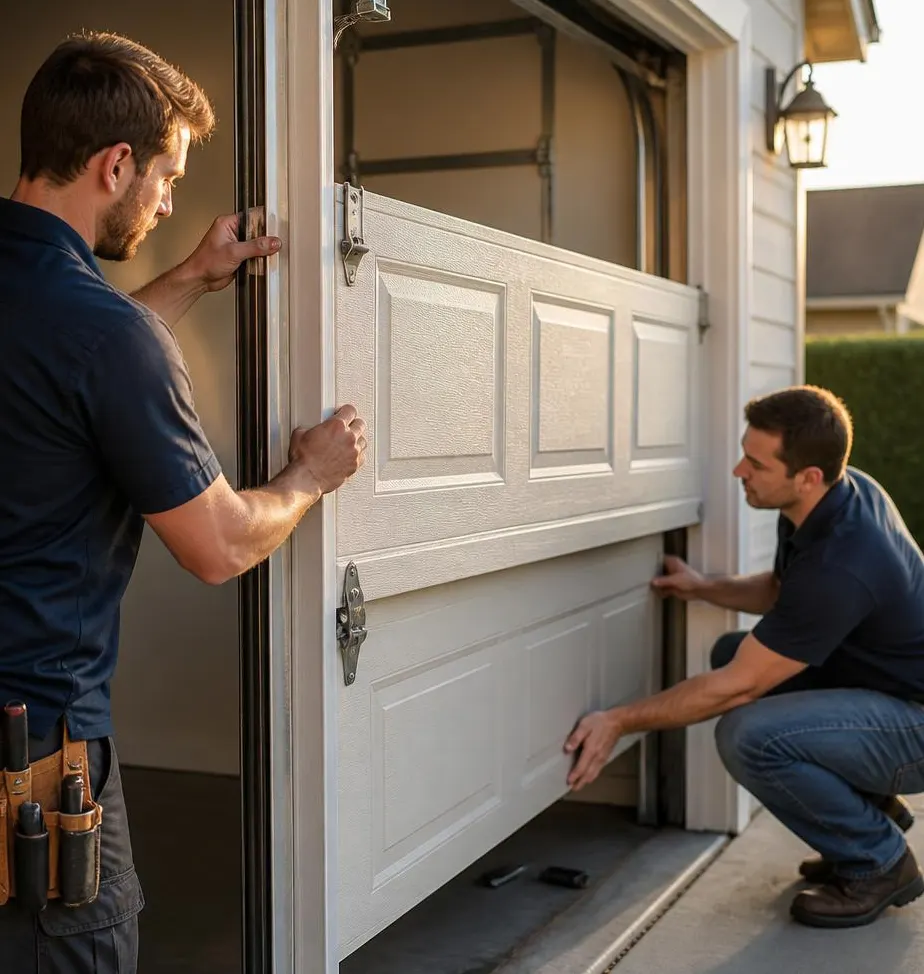
Short answer: reinforce the panels, check the track hardware, and confirm the springs are balanced, because a garage door that buckles under wind pressure can take the rest of the structure with it. Most homes aren't built with that in mind, which is why the garage door deserves more attention than it usually gets before a windy season.
Why the Garage Door Is the Weakest Wall in the House
Every other exterior wall in a typical home is a solid, continuous structure tied into the foundation and roofline. The garage door is different: it's a large panel of thin steel or aluminum, hung on tracks, held up by springs, and braced by not much more than its own hardware. When wind pushes against a house, that door is usually the first thing to flex.
If the door fails, wind doesn't just damage the garage. Once air forces its way inside, pressure builds against the roof from underneath, which is a common way roofs get torn off during severe wind events. A door that holds keeps that pressure where it belongs: outside.
Why This Matters Now, Not in Winter
The heaviest rain in this part of California tends to show up later in the season, but the wind comes first. Fall in the Inland Empire means Santa Ana wind events: dry, fast-moving gusts that funnel through the passes and hit inland communities harder than coastal ones. These winds also kick up dust and, depending on fire activity, smoke, which adds grit to tracks and rollers at the exact time you need them moving smoothly.
A garage door that's been quietly losing tension or developing slack all summer won't show it until a gust catches it wrong. That's the door you don't want to find out about during a storm.
Signs Your Door Isn't Ready for Wind
- Visible flex or bowing when the door is closed and wind hits it, even mild rippling in a panel.
- Loose or rattling hardware — hinges, track brackets, or roller brackets that move when you push on them by hand.
- Gaps between panel sections wide enough to see daylight or feel air movement.
- Tracks that aren't firmly anchored to the framing, which lets the whole assembly shift under pressure.
- An opener with no battery backup, which matters because Santa Ana wind events often come with power outages from downed lines.
Steps to Take Before the Next Wind Event
1. Check and tighten all hardware
Walk the full perimeter of the door with a wrench. Track brackets, hinges, and roller housings all loosen over time from normal use and temperature swings. Tightening them is free and takes fifteen minutes, but it's the single most effective thing a homeowner can do before wind season.
2. Inspect the tracks for warping or separation
Tracks that have pulled away from the wall, even slightly, won't hold the door steady when it's pushed from outside. This is also a common issue in homes that have had earthquake retrofit work done nearby, since vibration and settling can shift anchor points over time.
3. Have the springs checked for balance
Springs under the wrong tension make a door harder to control manually if the opener loses power mid-storm, and they put uneven stress on the panels every time the door cycles. If a spring looks stretched, has visible gaps between coils, or the door feels heavy or uneven when lifted by hand, that's a sign it needs attention before, not after, a wind event.
4. Consider reinforcement bracing for older doors
Doors installed years ago, especially lighter aluminum models, often weren't built with the same wind-load standards used today. Horizontal retrofit bracing kits can stiffen an existing door without full replacement, and they're worth discussing if your home sees regular wind exposure.
5. Add battery backup to the opener
If the power goes out mid-storm and the opener has no backup, you're stuck manually operating a door that may already be under wind pressure. A battery backup unit keeps the opener functional and lets you close the door remotely instead of going outside during a gust.
What a Wind-Rated Door Actually Offers
If you're due for a replacement anyway, wind-rated garage doors are built with reinforced steel, heavier gauge panels, and track systems designed to handle lateral pressure without flexing. They cost more upfront than a standard residential door, but for a home that regularly takes the brunt of inland wind patterns, the difference shows up the first time a real gust hits.
When to Call Corona Garage Door Pro
If your door shows flex, your hardware won't stay tight, or you're not sure your springs are rated correctly for the door's weight, that's worth a professional look before wind season peaks rather than after something fails. Corona Garage Door Pro handles garage door maintenance visits that catch loose hardware and track misalignment early, and we handle spring replacement when tension is off or coils are showing wear. If your door is older and wasn't built for the wind loads this area sees, we can also walk you through installation options built for it.
If a storm has already done damage, or your door won't close properly and you're worried about the next gust, don't wait on it. Call Corona Garage Door Pro for fast, reliable service across Corona, CA and the surrounding Inland Empire communities. We'll get your door wind-ready before the next event, not after.